






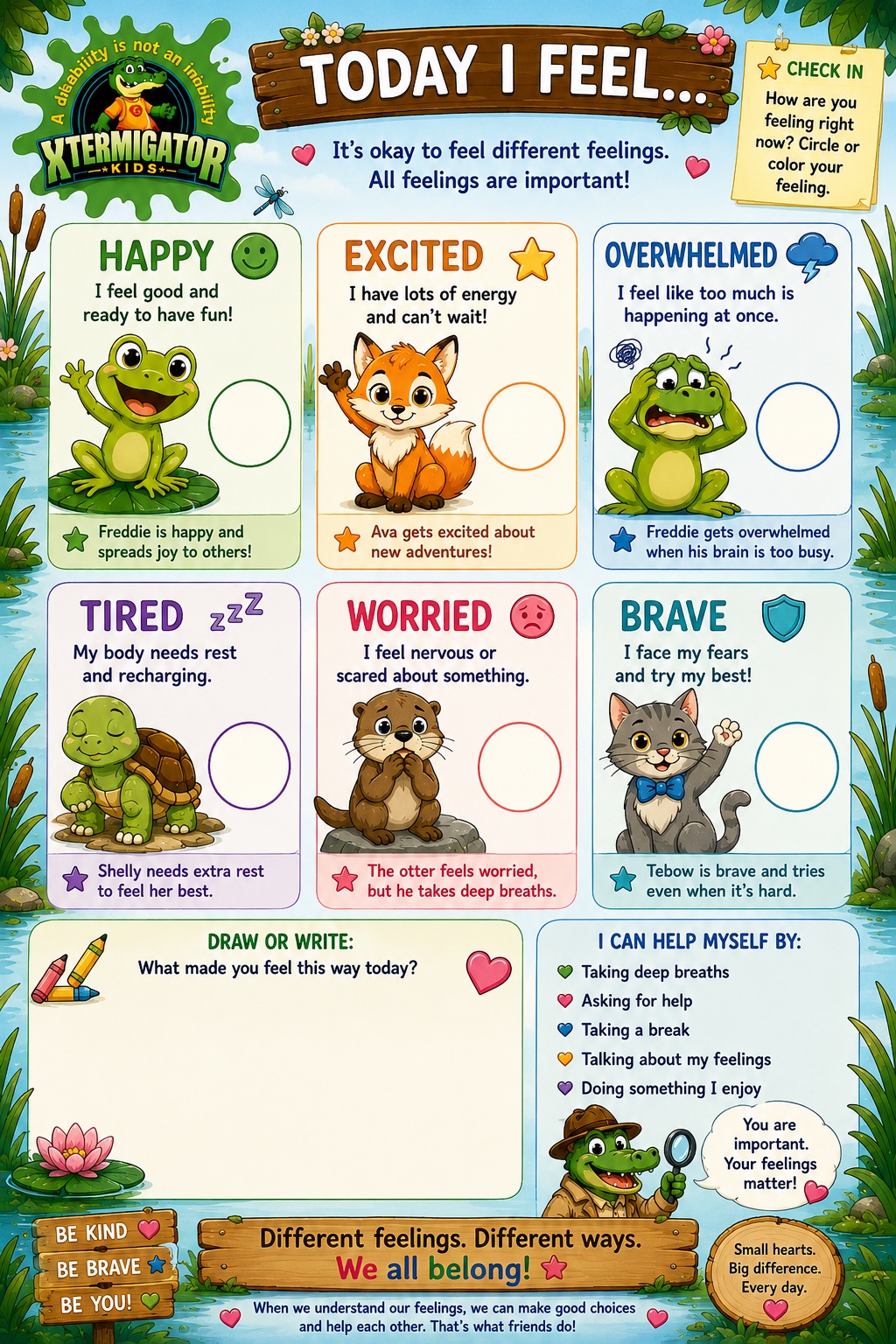
Feelings check-in
Today I Feel…
Name a feeling, notice what may have caused it, and choose a supportive next step.
The Friendly Ferns Resource Hub
Start small, choose what fits, and use these resources to create spaces where every person can participate with dignity.

Welcome to Fern Fort
Friendly Ferns activities turn big ideas—feelings, support, kindness, goals, and belonging—into manageable conversations families can explore together.
Free first-release activities
These private, no-login activities can be completed on screen, talked through together, or printed. Choose one—there is no need to do everything at once.
Feelings check-in
A gentle way for children to identify a feeling, describe what happened, and choose the kind of support that might help.
Personal support plan
Children identify early signs of overwhelm, helpful tools, trusted people, and a safe next step before a difficult moment arrives.
Kindness activity
A practical activity for noticing kind choices, using caring words, including others, and reflecting on how kindness feels.
Challenge planner
A strengths-based planner that helps children name a challenge, break it into smaller steps, ask for support, and celebrate effort.
Goal planner
A flexible goal-setting activity that honors different starting points, different supports, and different paths to success.
Reflection activity
Children connect a Friendly Ferns story—or their own day—to feelings, support, learning, kindness, and personal strengths.
Privacy note: answers entered into these activities are not saved, sent, or shared by XTERMIGATOR Kids.
Printable worksheets
These full-page worksheets can be viewed online, printed, or saved for later. Children may write, draw, point, or complete them with a trusted adult.
Feelings check-in
Name a feeling, notice what may have caused it, and choose a supportive next step.
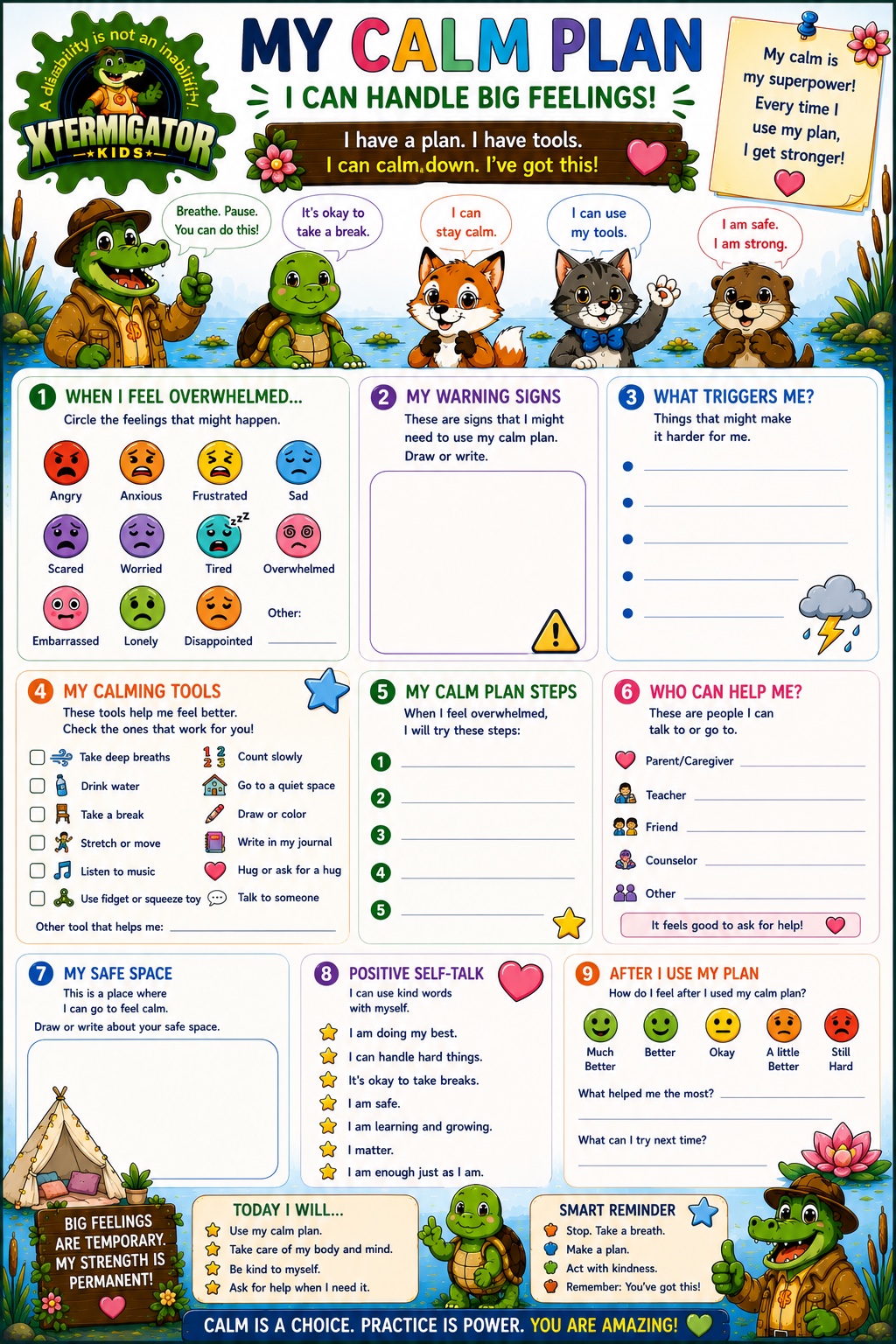
Calming tools
Identify warning signs, calming tools, safe people, and a plan for handling big feelings.
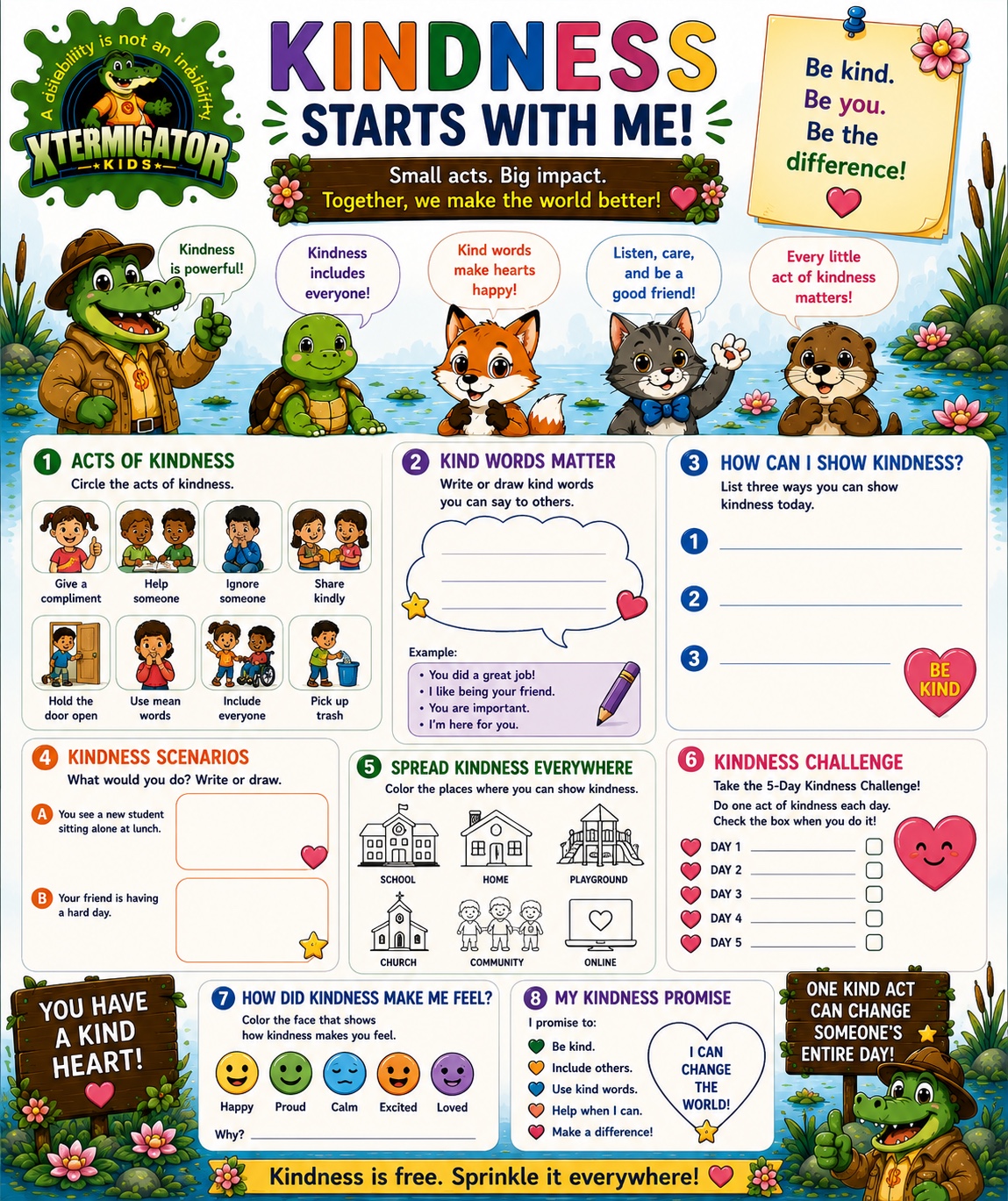
Kindness
Explore kind words and actions, practice real-life scenarios, and make a kindness promise.
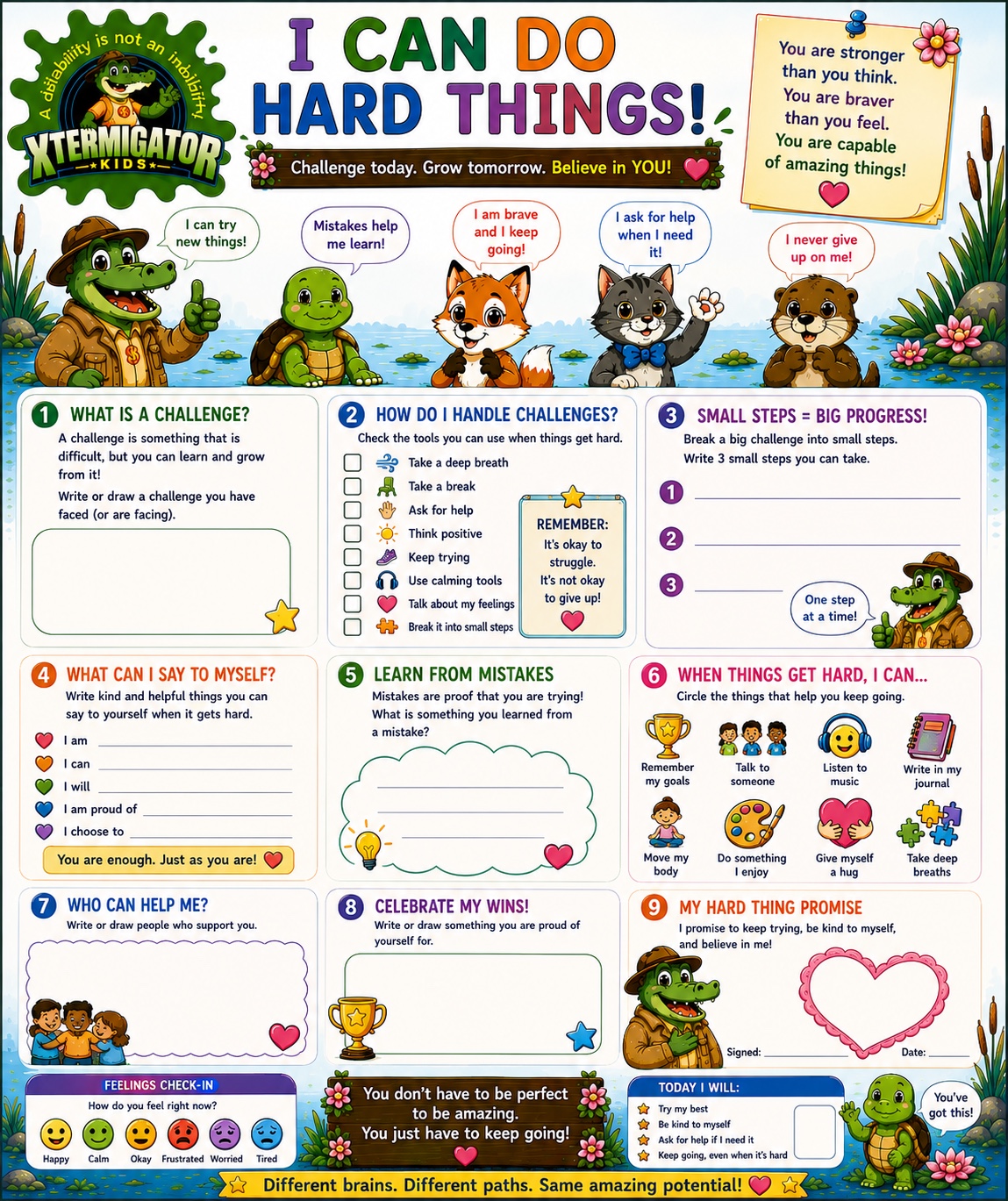
Confidence
Break challenges into small steps, ask for help, learn from mistakes, and celebrate progress.
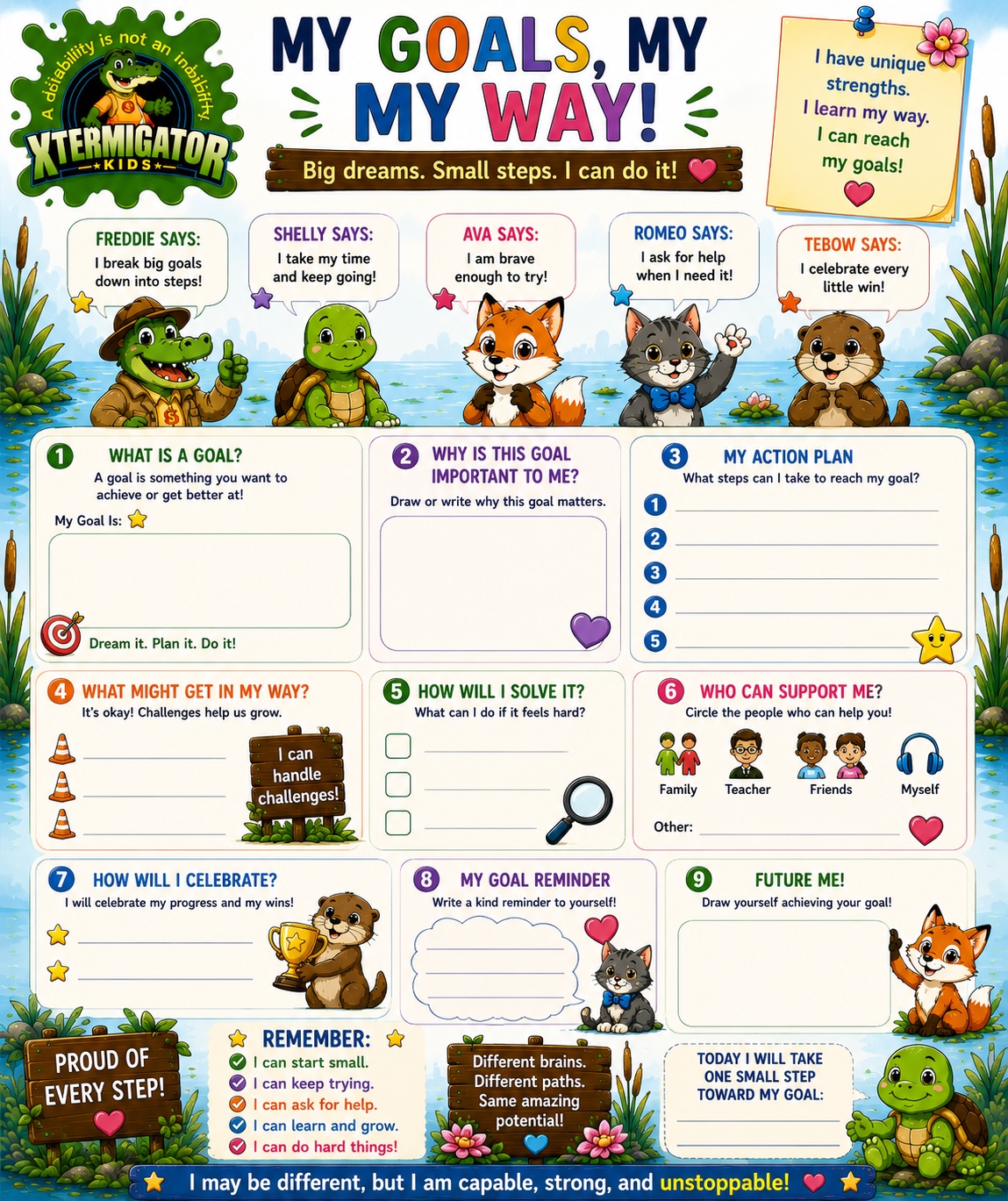
Goal setting
Choose a meaningful goal, plan manageable steps, name support people, and celebrate wins.
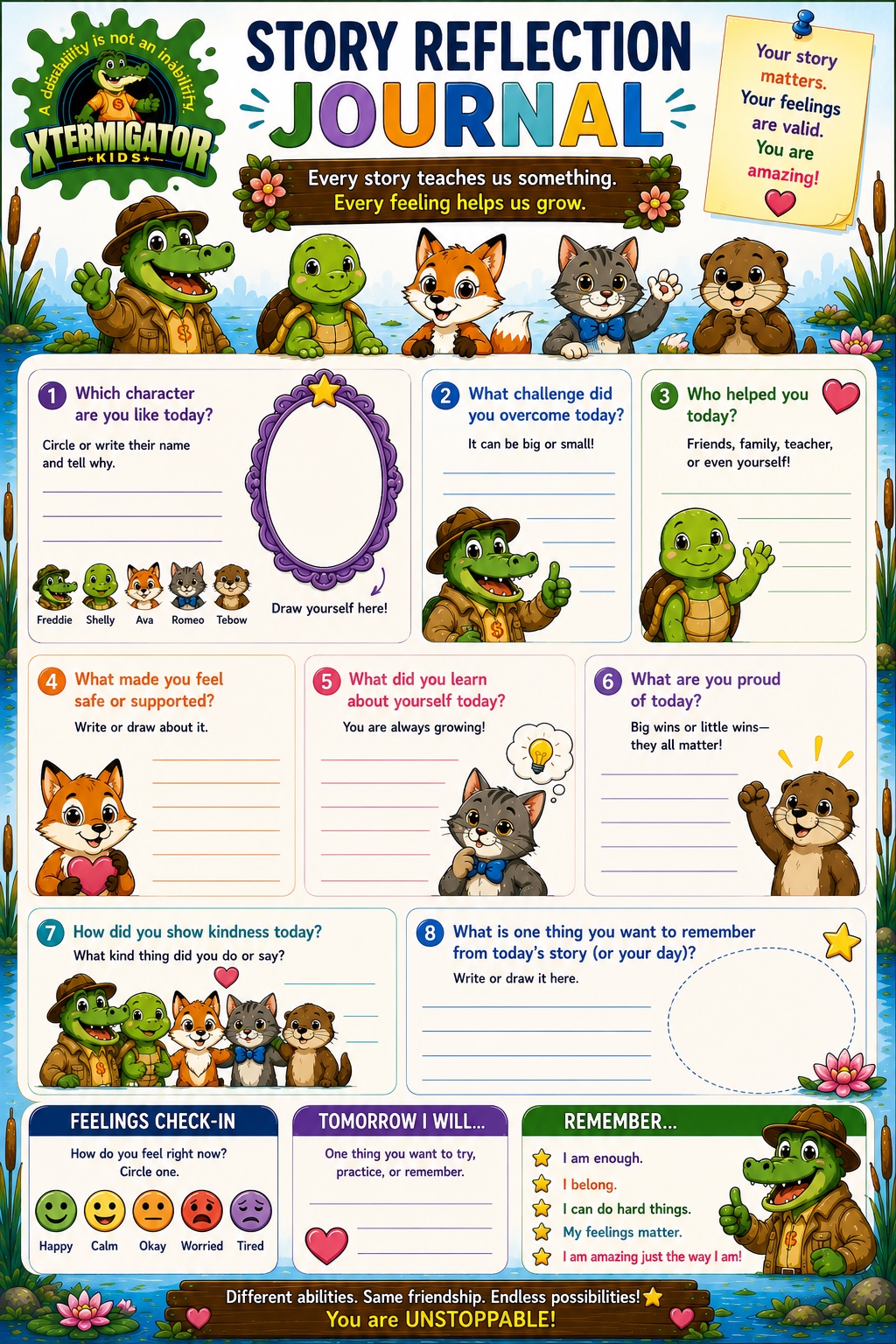
Reflection
Connect a story—or the day—to feelings, challenges, support, kindness, and personal growth.
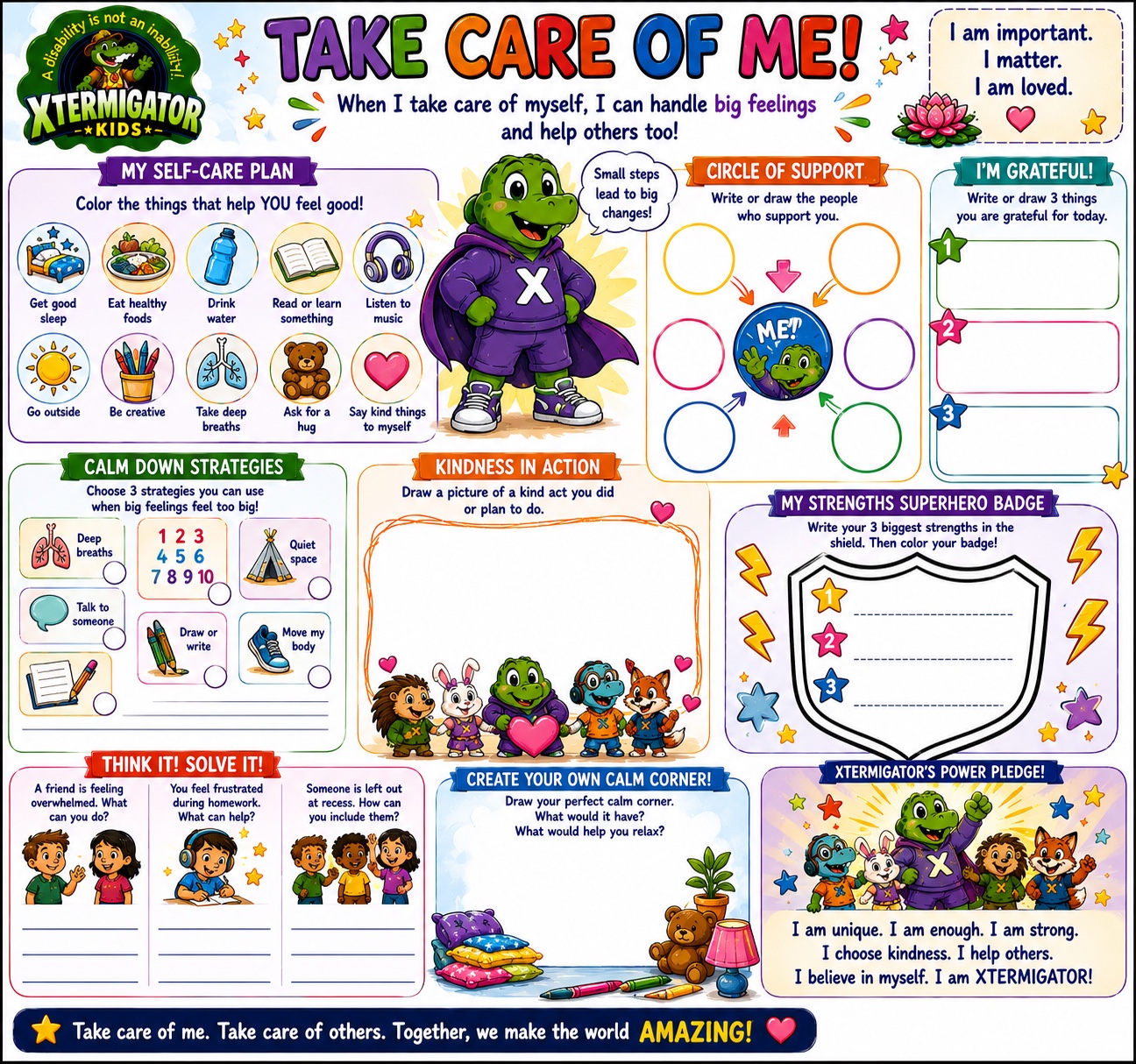
Self-care
Build a self-care plan, choose calming strategies, identify support, and name personal strengths.
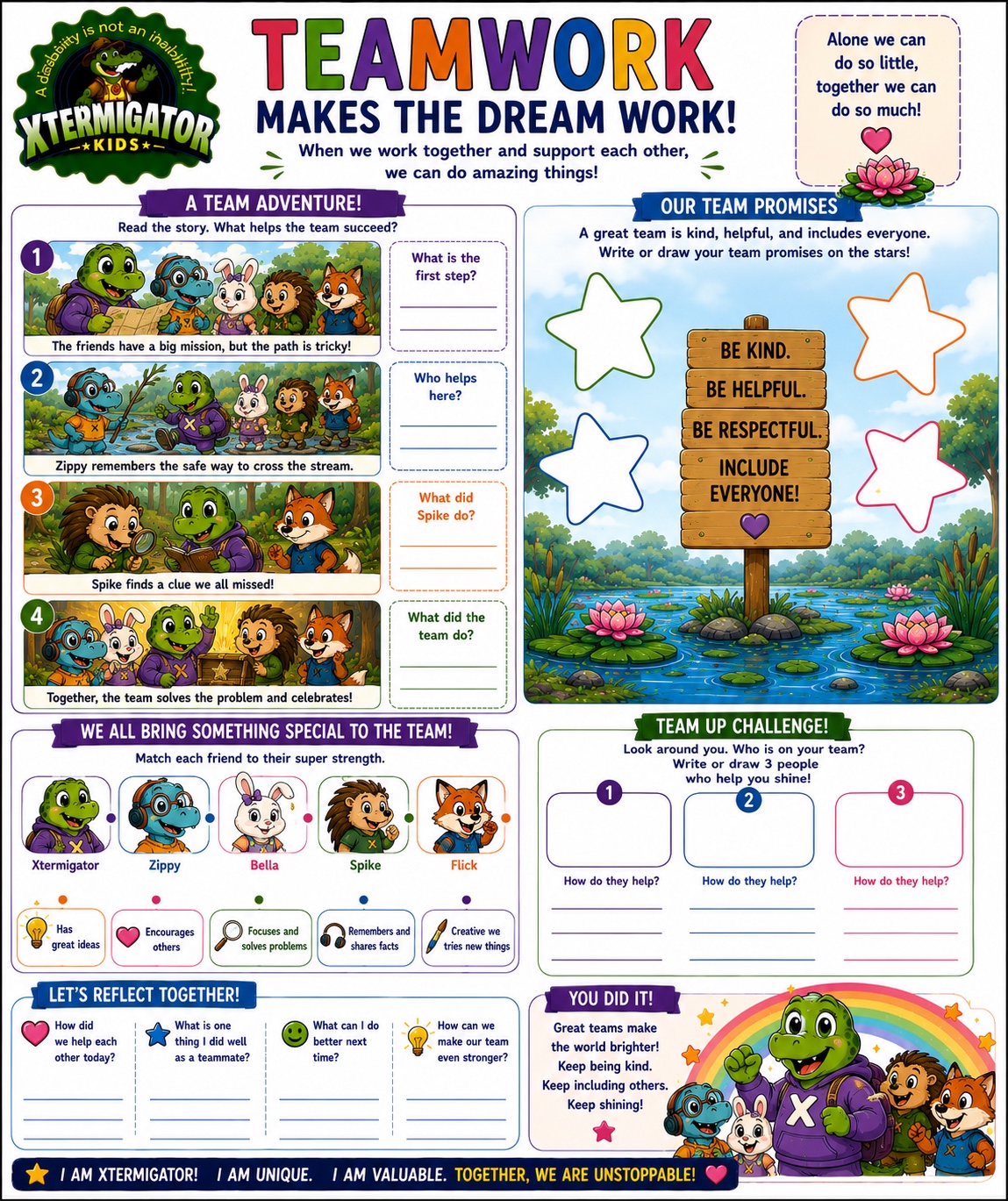
Teamwork
Read a team adventure, recognize different strengths, and create promises for working together.
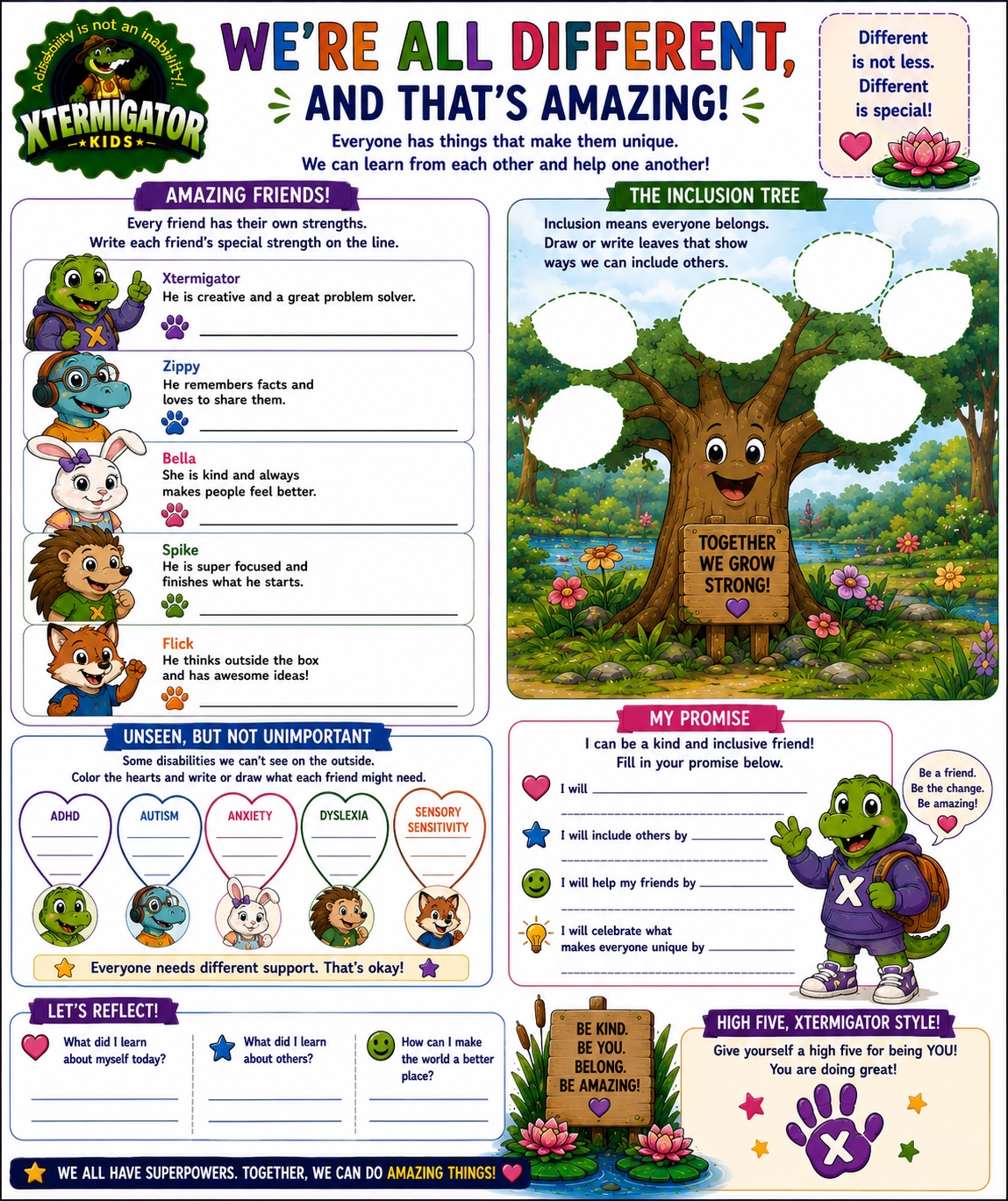
Belonging
Celebrate different strengths and supports while making a personal promise to include others.
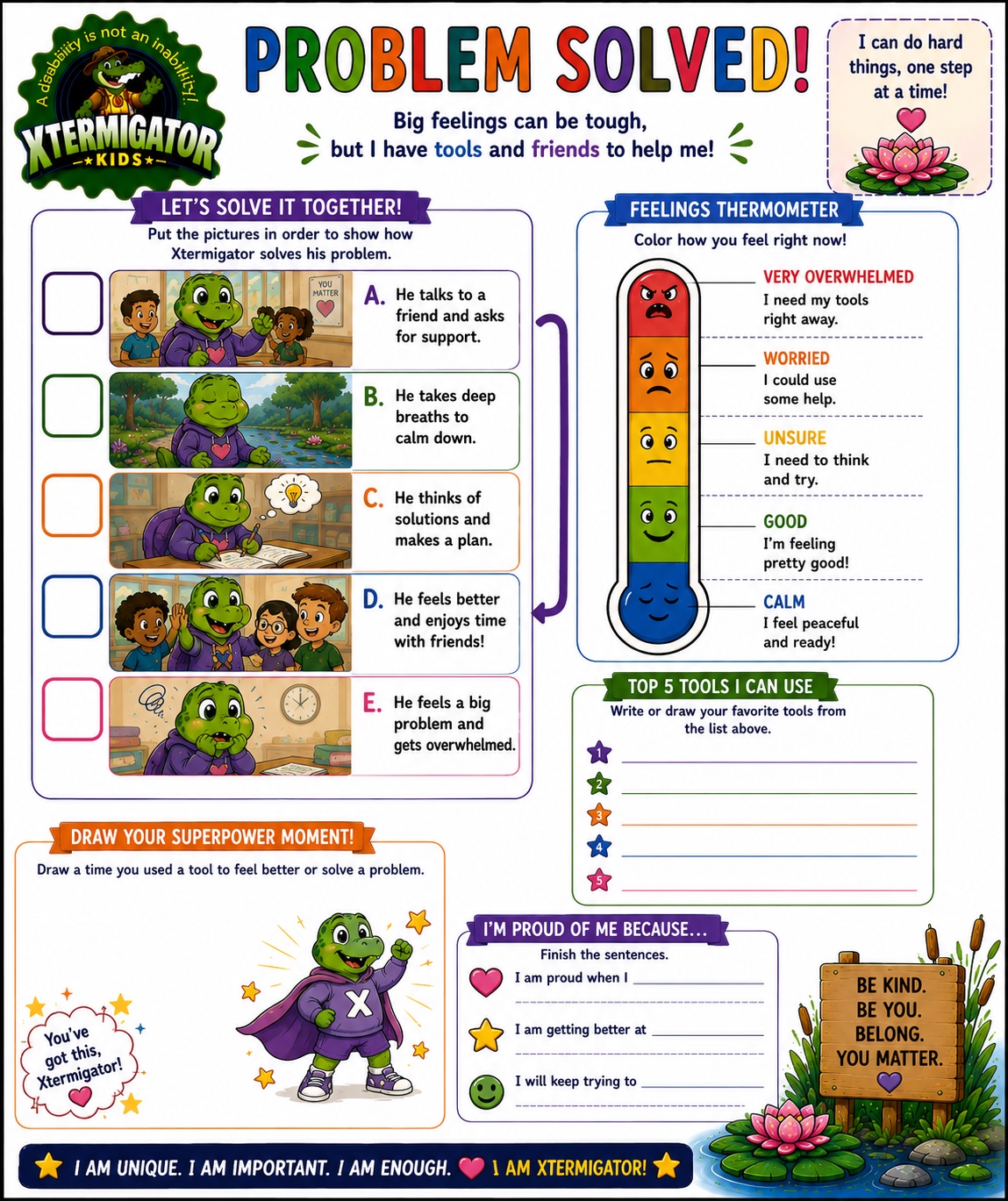
Problem solving
Put helpful steps in order, use a feelings thermometer, and build a personal support toolkit.
A supportive starting point: These educational activities are designed to encourage conversation and reflection. They do not replace individualized medical, mental-health, educational, or crisis support.
Optional faith collection
Church schedules, belonging activities, inclusion conversations, and service prompts will live in their own clearly labeled collection so every family can intentionally choose what fits.
Family & educator tools
These Inclusive Pathways Collaborative tools are designed for families, older students, educators, and support teams. They open in a separate website and do not require a XTERMIGATOR Kids account.
A guided assistant that helps students and families understand accommodation options, prepare requests, and advocate for appropriate supports.
Best used with a trusted adult. This tool provides educational guidance and does not replace school, medical, or legal advice.
Open the Advocacy AssistantA practical toolkit for proactively checking in with students about disability accommodations and supports—before a formal request is made.
Designed for educational settings. Use it to support respectful, student-centered conversations.
Open the Faculty ToolkitA guided tool for caregivers, families, educators, and individuals working through daily overwhelm, support planning, care coordination, and resource navigation.
Use what fits your situation. This educational planning tool does not replace medical, mental-health, legal, or crisis support.
Open the Support NavigatorA structured planning tool for educators, caregivers, and IEP/504 teams using frameworks including PBIS, MTSS, UDL, and IDEA.
Start with the person, not the behavior. Plans should remain strengths-based, dignity-centered, individualized, and reviewed by the appropriate support team.
Open the Support AssistantProvided through Inclusive Pathways Collaborative resource collections. View the IPC app directory or explore the Digital Tools Hub.
Our resource promise
Need something more specific?
Tell us about your audience, setting, accessibility priorities, and the conversation you want to make possible.